
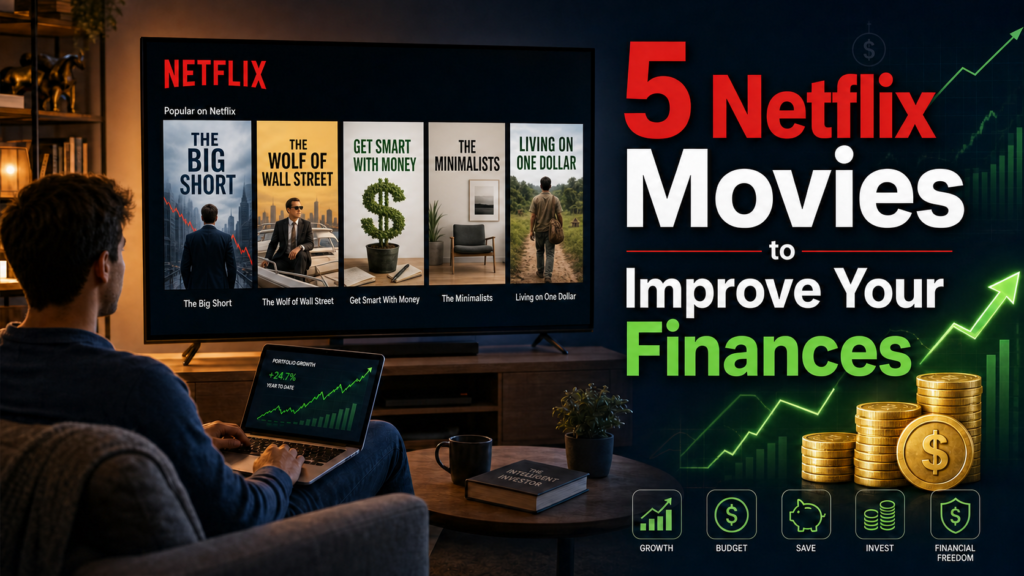
Movies and documentaries can make financial lessons easier to understand because they turn complex topics into stories. Instead of reading only about debt, investing, consumerism, greed, risk, or poverty, you see how money decisions affect real people, families, businesses, and entire economies.
Finance is not just about numbers. It is also about behavior, emotions, incentives, discipline, and values. The way people earn, spend, save, invest, and take risks often reveals what they believe about success, security, freedom, and status.
These five finance movies and documentaries are useful because each one shows a different side of money. Some focus on Wall Street and investing. Others focus on personal budgeting, consumption, poverty, and intentional living. Together, they can help you think more clearly about your financial choices.
Disclaimer: This article is for educational and informational purposes only. It is not financial advice.
The Big Short — Understand Risk Before It Becomes a Crisis
The Big Short is one of the most popular finance movies for understanding the 2008 financial crisis. The film explains how parts of the housing market, mortgage lending, and Wall Street became dangerously disconnected from reality.
What makes this movie powerful is that it takes a complicated topic and presents it in a way that feels entertaining, fast, and surprisingly understandable. It shows how people inside the financial system noticed warning signs before the crash, while many others ignored the risks because the system seemed profitable.
The biggest lesson from The Big Short is that confidence is not the same as safety. Just because everyone believes something is working does not mean it is stable. Markets can become emotional. Institutions can make mistakes. People can follow incentives that reward short-term profit while hiding long-term danger.
For personal finance, this movie is a reminder to ask better questions. Before investing, borrowing, or following financial trends, it is important to understand the risk behind the opportunity. If something seems too easy, too profitable, or too popular, it may deserve a second look.
Finance lesson:
Do not invest in or trust something just because everyone else is doing it. Learn how it works first.
Best takeaway:
Financial literacy helps you see warning signs that others may ignore.
The Wolf of Wall Street — Money Without Ethics Can Become Dangerous
The Wolf of Wall Street shows the extreme side of ambition, sales pressure, greed, and unethical behavior in finance. The movie follows a stockbroker’s rise and fall in a world driven by aggressive selling, excess, and manipulation.
This film is not a guide to success. It is more useful as a warning. It shows what can happen when money becomes disconnected from values, responsibility, and ethics. The characters chase wealth and status, but their choices create serious consequences for themselves and others.
From a finance perspective, the movie teaches that persuasion is powerful, but it can be misused. In the real world, many financial mistakes happen because people are influenced by hype, pressure, fear of missing out, or promises that sound too good to be true.
This is especially important for anyone interested in investing, sales, business, or entrepreneurship. Making money matters, but how you make money matters too. Long-term success requires trust, discipline, and integrity. A financial win that depends on misleading people is not real success.
Finance lesson:
High income does not equal wisdom, and confidence does not equal credibility.
Best takeaway:
Protect yourself from hype. Good financial decisions require clear thinking, not pressure.
Content note:
This movie includes mature themes, so it is better suited for adult viewers.
Get Smart with Money — Build Better Financial Habits
Get Smart with Money is a practical documentary about people trying to improve their financial lives with guidance from money experts. Instead of focusing only on Wall Street or major economic events, it looks at everyday financial problems: overspending, uncertainty, income stress, budgeting, and planning.
This documentary is useful because it shows that personal finance is not one-size-fits-all. Different people have different goals, incomes, habits, fears, and responsibilities. A financial plan that works for one person may not work for another.
One of the strongest lessons from this documentary is that money improvement often starts with awareness. Many people do not need a perfect financial strategy at first. They need to know where their money is going, what habits are creating stress, and what small changes can create progress.
The documentary also helps reduce shame around money. Many people feel embarrassed about debt, spending mistakes, or not knowing where to start. But financial growth usually begins when you stop avoiding the problem and start looking at it honestly.
Finance lesson:
You cannot improve what you refuse to measure.
Best takeaway:
Track your spending, understand your habits, and create a plan that fits your actual life.
The Minimalists: Less Is Now — Spend With Purpose
The Minimalists: Less Is Now connects money with consumer behavior, simplicity, and purpose. The documentary challenges the idea that buying more automatically leads to happiness.
This is an important finance lesson because many money problems are not only income problems. Sometimes they are spending-pattern problems. People often buy things to reduce stress, impress others, feel successful, or fill emotional gaps. But over time, unnecessary spending can create clutter, debt, and financial pressure.
Minimalism does not mean owning nothing. It means being more intentional about what you allow into your life. From a financial perspective, this mindset can help you spend less on things that do not matter and save more for things that do.
The documentary encourages viewers to ask better questions before buying: Do I need this? Will I use it? Does it support my goals? Am I buying this because I value it, or because I am trying to feel better in the moment?
This film is especially helpful for people who want to save money, reduce clutter, avoid lifestyle inflation, or become more intentional with their financial choices.
Finance lesson:
More spending does not always mean more happiness.
Best takeaway:
When you define success clearly, it becomes easier to stop spending money on things that do not support your life.
Living on One Dollar — See Money Through a Bigger Lens
Living on One Dollar follows young people trying to understand what daily life is like for people living in extreme poverty. The documentary brings attention to income instability, limited resources, difficult choices, and the emotional weight of financial insecurity.
This film is different from the others because it moves away from Wall Street, entrepreneurship, and consumer culture. Instead, it focuses on survival, inequality, and gratitude. It reminds viewers that money is not just about wealth building. It is also about dignity, opportunity, health, education, and basic stability.
One of the most important lessons from this documentary is that financial choices are not always simple. People with limited income often face difficult trade-offs. Saving money is much harder when basic needs already consume most of a person’s income.
For viewers in the United States, this documentary can create a deeper appreciation for financial stability and a better understanding of poverty. It can also encourage more thoughtful decisions about spending, giving, and long-term planning.
Finance lesson:
Money affects opportunity, security, and daily decision-making.
Best takeaway:
Financial awareness should include both personal responsibility and compassion for people facing difficult circumstances.
How These Films Can Improve Your Financial Mindset
These five movies and documentaries show that money is more than a bank balance. Money is connected to psychology, culture, values, opportunity, and decision-making.
The Big Short teaches you to understand risk.
The Wolf of Wall Street teaches you to question hype and protect your ethics.
Get Smart with Money teaches you to build better habits.
The Minimalists: Less Is Now teaches you to spend with purpose.
Living on One Dollar teaches you gratitude, awareness, and perspective.
Together, they create a strong foundation for financial growth. They do not replace financial education, but they can inspire you to think differently about how money works and how your choices shape your future.
Apply This Today
Track your spending for one week.
Do not judge yourself. Just observe where your money actually goes.
Question one financial habit.
Choose one recurring purchase, subscription, or spending pattern and ask: “Does this still support my goals?”
Learn before you invest.
Before following any financial trend, take time to understand the risks, costs, and basic rules.
Final Thoughts
Finance movies and documentaries are valuable because they make money lessons more memorable. They help you see both the opportunities and the dangers connected to financial decisions.
Some films show the risks of greed. Others show the power of discipline, simplicity, and awareness. The most important message is this: better money decisions begin with better thinking.
You do not need to become a Wall Street expert to improve your financial life. You can start by becoming more aware, more intentional, and more honest about your habits.
A good finance movie can entertain you, but a great one can change the way you think about money.